Prepaid Smart Cards: Streamlining School Cafeteria & Campus Operations
July 8, 2026 in Cashless School & Campus
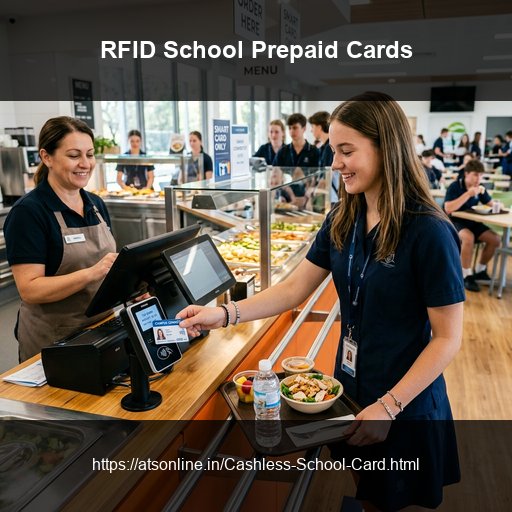
Managing cash transactions in school canteens, bookstores, and uniform shops has historically been an operational bottleneck and a source of administrative leakage. An RFID school card system offers a modern, closed-loop alternative — replacing coins, paper tokens, and manual bookkeeping with a single prepaid smart card that students tap to pay. WalletSchoolPay by ATS Online delivers a zero-cash school campus environment, streamlining student purchases at cafeterias and retail counters while providing parents with full visibility over their child's spending and nutrition.
This comprehensive guide explains how RFID prepaid school card systems work, their core benefits for school administrations and parents, and why schools across India are moving to a cashless model.
The Challenge of Cash on Campus
School canteens and campus stores operate under a very specific transaction profile: extremely high volume concentrated into short, fixed break windows. When recess or lunch hour starts, hundreds of students descend upon counters simultaneously.
In a cash-based canteen environment, this concentrated demand creates several severe operational problems:
- Slow transaction speeds: Counting cash, calculating change, and managing loose coins takes 30 to 45 seconds per transaction. In a 20-minute recess, this delay prevents many students from being served.
- Administrative overhead: School staff must manage cash floats, count physical collections daily, reconcile registers, and physically deposit cash at banks — adding hours of administrative work.
- Hygiene concerns: Canteen staff frequently alternate between handling physical currency and serving food, presenting a clear hygiene risk in a school dining setting.
- Cash loss and leakage: Loose cash is vulnerable to billing errors, cashier pilferage, and students losing their lunch money on the playground.
- Zero parent visibility: Parents have no way to verify if their child spent their lunch allowance on healthy meals, bought excessive sweets, or lost the money entirely.
A prepaid RFID campus card system resolves these issues at the structural level.
How an RFID School Card System Works
An RFID school card system operates as a secure, closed-loop cashless ecosystem limited to the school campus. The system comprises three main elements: the student smart card, the POS terminals at campus counters, and the parent/administration management portal.
Here is the step-by-step workflow of a modern RFID prepaid card system:
1. Card Issuance and Student Profiling
Each student and staff member is issued a personalized smart card embedded with an RFID (Radio Frequency Identification) chip. The card is linked to a secure digital account in the school's central database. Each card features the student's name, roll number, photo, and class, serving as a school identity card and payment card simultaneously.
2. Parent Recharge and Portal Access
Parents receive secure login credentials to a web portal or mobile application. Through this dashboard, they can: - Recharge the prepaid card balance online using UPI, credit/debit cards, or net banking. - View real-time transaction history showing what their child bought and when. - Set daily or weekly spending limits to encourage budget awareness. - Set dietary restrictions, flagging specific ingredients (e.g., peanuts or gluten) that will trigger alerts on the canteen POS screen if scanned.
3. Tap-to-Pay at Campus Counters
When purchasing food at the canteen, books at the bookstore, or uniforms at the school tuck shop, the student simply presents their RFID card. The operator scans the items on the POS terminal and the student taps their card on the RFID reader. - The system checks the account balance, verifies any spending limits, and checks for flagged dietary items. - If approved, the transaction is completed in under one second, deducting the amount directly from the student's prepaid balance. - An automated SMS or app notification is sent to the parent confirming the transaction details.
4. Automated Administrative Reporting
The school administration and canteen contractors access a centralized dashboard showing aggregated sales reports, inventory levels, and settlement details. Funds are collected centrally by the school or canteen contractor, eliminating cash reconciliation disputes completely.
Cash/Tokens vs. RFID School Cards: A Operational Comparison
| Feature | Cash / Paper Tokens | RFID Prepaid Smart Cards |
|---|---|---|
| Transaction Speed | Slow (30 - 45 seconds per student) | Instant (Under 1 second tap-to-pay) |
| Cash Handling Risk | High (Leakage, counting errors, theft) | Zero (All funds are digital and secure) |
| Hygiene Level | Low (Cash handling alongside food service) | High (Contactless payment, zero cash touch) |
| Parental Oversight | None (No record of how money is spent) | Full (Real-time tracking of spending & items) |
| Dietary Controls | Impossible (Canteen cannot check allergies) | Active (POS triggers alerts for flagged allergens) |
| Queue Length | Long (Recess ends before all students are served) | Minimized (High throughput serves more students) |
| Reconciliation | Manual (Hours of daily cash counting) | Automated (Real-time reports available instantly) |
Key Benefits of Going Cashless
Schools adopting an RFID prepaid card system experience immediate operational improvements across multiple areas:
For School Administrations
- Streamlined operations: Reconciling multiple sales counters across canteens, bookstores, and uniform shops is reduced from a daily manual chore to a simple dashboard lookup.
- Elimination of revenue leakage: Every transaction is written to an immutable digital audit log. Cashier skimming and inventory discrepancies are eliminated.
- Accurate vendor settlements: For schools that contract out canteen services, the prepaid card system provides a single source of truth for revenue splits and settlements.
- Professional campus brand: Implementing contactless RFID payments signals to parents and visitors that the school is committed to modern, efficient, and secure campus technology.
For Parents
- Peace of mind: Parents no longer need to worry about providing loose change daily or their children losing cash.
- Promoting healthy nutrition: Knowing they can check purchase history encourages students to make better food choices, and parents can actively block unhealthy items.
- Financial literacy: Setting a weekly budget teaches students to manage their expenses within set limits, fostering early financial responsibility.
For Canteen Staff and Contractors
- Higher sales volume: Serving students faster means processing more transactions during short break times, increasing canteen revenue.
- Inventory tracking: POS integration helps canteen managers track popular items and reduce food waste by aligning preparation with actual sales data.
Frequently Asked Questions
Is the RFID school card system safe for young children?
Yes. The RFID cards are completely passive, meaning they do not emit any radiation. They only activate when placed within a few centimeters of the secure POS reader. The cards carry no personal financial information; they only contain a secure identifier that points to an account on the school's private cloud database.
What happens if a student loses their RFID card?
If a card is lost or misplaced, the parent or student can instantly block the card via the parent app or school helpdesk. Because the card does not store money locally, the student's balance remains completely safe. The school can issue a replacement card and link it to the existing account in a few minutes.
Can parents set daily spending limits?
Yes. Through the parent portal, parents can set a daily spending threshold (e.g., max ₹100 per day). The canteen POS terminal will automatically refuse transactions that exceed this limit, preventing students from spending their entire weekly allowance in a single day.
Can the system handle dietary restrictions or food allergies?
Yes. Parents can specify food allergies or restrictions in their portal. If a student attempts to buy an item containing a flagged ingredient, the POS screen displays a clear warning to the operator, preventing the purchase and protecting the student's health.
How do parents recharge the smart cards?
Parents can recharge the smart cards online through the school's integrated payment gateway using UPI, credit cards, debit cards, or net banking. Recharges are credited to the student's prepaid balance immediately.
How long does it take to implement an RFID card system in a school?
A standard implementation — including database setup, parent portal configuration, card printing, and POS terminal setup — typically takes 2 to 3 weeks. ATS Online provides comprehensive training for administrative staff, canteen operators, and onboarding documentation for parents.
Ready to Transform Your School Canteen Into a Cashless Campus?
ATS Online deploys prepaid RFID card POS systems at schools, colleges, and university campuses across India — eliminating cash hassles, reducing queues, and providing parents with complete transaction transparency.
Or call us directly at: +91-9810078010
Conclusion
By implementing a secure, closed-loop RFID campus card POS system, schools and universities protect their revenue, optimize break-time efficiency, and build a modern, high-hygiene food service environment that parents trust.
Switch to cashless school canteen cards and secure your cafeteria operations. Visit www.atsonline.in, call us at +91-9810078010, or email ats.fnb@gmail.com to explore our school POS solutions.