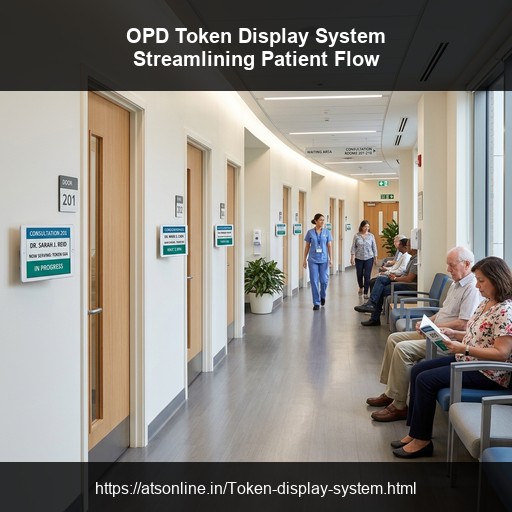
An outpatient department (OPD) is the first point of contact between a patient and the hospital's clinical staff. It is also the most prone to operational bottlenecks. On busy mornings, crowds of patients and their relatives gather directly outside consultation room doors, hoping to be called next. This compromise patient privacy and creates stress for doctors. Implementing an **OPD Token Display System** solves this core workflow problem, ensuring a quiet, orderly, and highly efficient patient flow.
How an OPD Token System Reorganizes Consultation Rooms
The core purpose of an OPD token display is to replace physical lines and corridor crowding with a structured virtual queue. When a patient registers or checks in, the system assigns them a sequential token number.
- Lobby Displays: Large Smart TVs in central waiting areas show which tokens are being called across all active doctor cabins.
- Door displays: Small digital tablets mounted outside each consultation room door display the name of the doctor, the current token inside, and the next two tokens in line.
- Calling Interface: Doctors call the next patient directly from their clinic computers or mobile tablets using a simple web dashboard.
Operational Benefits for Outpatient Clinics
Deploying digital OPD screens yields immediate workflow improvements for both administrative and clinical staff:
1. Protects Patient Privacy (HIPAA Alignment)
When patient crowds gather directly inside or outside the doctor's cabin, they can hear confidential medical discussions of the patient inside. By keeping waiting patients in the lobby and calling them one by one via digital token displays, hospitals can maintain patient privacy and clinical dignity.
2. Enhances Doctor Productivity
Nurses in traditional setups spend significant time managing the door, arguing with patients pushing to enter next, or looking for patients who stepped away. An automated token display system manages the order. Doctors call the next patient at the press of a button, reducing idle intervals between consultations and letting doctors treat more patients per shift.
3. Manages Appointment Types Dynamically
Outpatient clinics handle different patient categories: pre-booked appointments, walk-ins, emergency cases, and patients returning to show lab reports. A smart queue management system allows clinic receptionists to prioritize or slot in tokens (e.g. inserting an emergency token or report review) dynamically, while updating the display sequence automatically to keep waiting patients informed.
Low-Cost SaaS Solutions vs. High-Cost Hardware
Legacy wired LED displays require extensive network cables and custom button keypads for each cabin. In contrast, modern SaaS-based systems like ATSonline MyTokenDisplay run in standard web browsers. It integrates smoothly with your existing clinic PCs or billing software (such as hotel front-desk PMS or restaurant POS systems). Hospital IT staff can set up the entire network using budget-friendly Android tablets and standard Smart TVs over Wi-Fi, dramatically reducing installation costs.
Frequently Asked Questions (FAQs)
Q1: What is an OPD token display system?
An outpatient department (OPD) token display system is a software-driven solution that manages patient appointments and consultations. It replaces chaotic waiting outside doctor cabins with a visual display board showing which token number is currently being called.
Q2: How does a digital OPD token display improve doctor efficiency?
It allows doctors to call the next patient instantly using a simple mobile app or desktop dashboard, eliminating the need to wait for a nurse to manually search for and escort the next patient.
Q3: Can the OPD token system show wait times for each doctor?
Yes, advanced cloud-based systems can display the average consultation time and estimated wait time for each doctor on lobby TV screens, helping manage patient expectations.