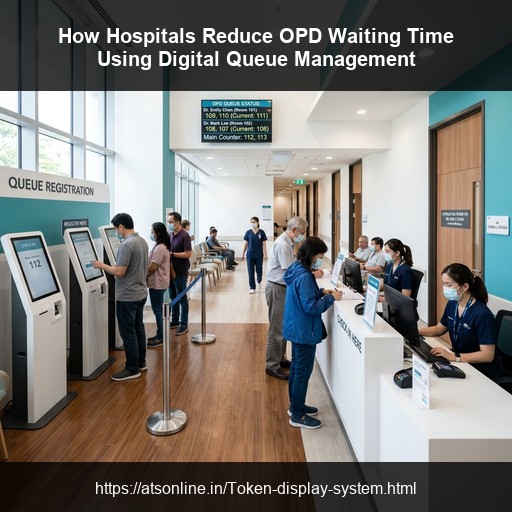
An outpatient department (OPD) is one of the busiest hubs in any medical facility. When doctors experience delays, patient queues build up, creating crowded waiting rooms and a stressful environment. A **Digital Queue Management System** addresses this bottleneck, optimizing patient flow and reducing OPD waiting times by up to 50%.
The OPD Wait Time Challenge in Indian Healthcare
In high-volume clinics and hospitals, patients check in, pay billing fees, submit lab samples, wait for doctors, and pick up pharmacy prescriptions. Traditional physical line-ups at each step create major friction. Patients get frustrated by the lack of transparency, and doctors waste time calling patients manually.
How Queue Software Streamlines the Patient Journey
Digital queue systems segment and automate the OPD check-in workflow:
- Entry Segmentation: When a patient checks in at the reception desk, the system registers them and issues a unique doctor token. The system automatically segments patients based on the specific doctor's queue.
- Active Waiting Lounges: Seated patients monitor the OPD queue status on a mounted Smart TV screen. Chimes and voice alerts notify the next patient, giving them clear guidance and reducing waiting anxiety.
- One-Click Counter Calling: Doctors and lab technicians call the next patient from their consulting room PC. The Smart TV outside updates immediately, guiding the patient exactly where to go.
Leveraging Queue Analytics for Hospital Staffing
A major advantage of a digital queue system is the generation of operational dashboards. Hospital administrators can monitor:
- Doctor Consultation Speeds: The average time a doctor takes to consult a patient.
- Lobby Registration Load: Identifying peak registration hours to staff extra cashier counters.
- Pharmacy Dispatch Rates: Monitoring prescription preparation speeds to resolve checkout delays.
Launch healthcare queueing with ATSonline
ATSonline's MyTokenDisplay software provides a flexible, wire-free queue management solution for hospitals and clinics. By utilizing standard Smart TVs over Wi-Fi and browser-based doctor calling interfaces, it eliminates dedicated hardware costs. It can even work in offline mode over local networks, ensuring 100% clinic uptime.
Frequently Asked Questions (FAQs)
Q1: How does queue software reduce outpatient (OPD) waiting times?
It reduces wait times by organizing check-ins, segmenting patients by doctor availability, automating the calling process with chimes/voice prompts, and directing patients exactly when and where to go.
Q2: Can hospital queue software integrate with Hospital Information Systems (HIS)?
Yes, modern digital queue systems offer APIs to integrate with HIS/EMR systems, automatically queuing patients as soon as they are registered or paid in the hospital database.
Q3: What queue metrics should hospital administrators monitor?
Administrators should monitor average patient wait time, consulting duration per doctor, counter transaction times, and peak OPD registration hours to improve scheduling.