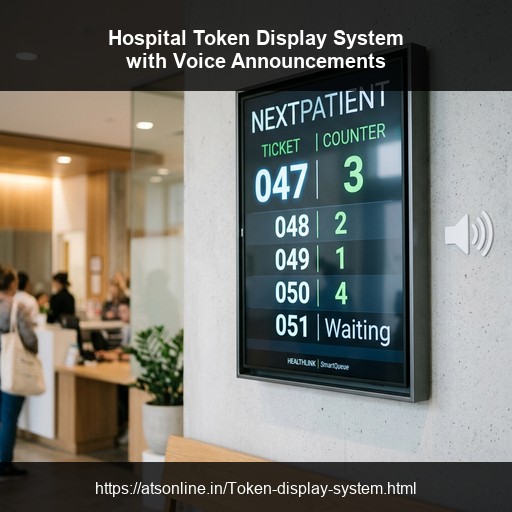
In a busy hospital waiting room, relying purely on visual screens to alert patients is not always enough. Patients might be distracted, resting their eyes, reading prescriptions, or checking their mobile devices. More importantly, elderly, illiterate, or visually impaired patients may struggle to read digital text overlays. Integrating a Token Display System with Voice Announcements is a crucial step toward creating an accessible, efficient, and patient-centric healthcare environment.
What is a Voice Calling Token System?
A voice-calling token system is a software-driven solution that broadcasts audio alerts alongside visual screen updates. When a doctor or clerk calls the next patient token (e.g. "Token Number 45, proceed to Doctor Room 3"), the system automatically reads out the message through localized speakers. It turns a silent TV display into a active, multi-sensory communications terminal.
Why Voice Announcements Matter in Healthcare
Equipping your clinic or hospital lobby with vocal calling queues offers substantial workflow benefits:
1. Enhances Patient Accessibility (ADA Compliance)
Hospitals cater to individuals with various health conditions, including patients with temporary or permanent visual impairments. Relying solely on visual LED screens excludes these groups. Vocal cues allow them to navigate the clinic independently, improving overall accessibility and compliance with international healthcare guidelines.
2. Reduces Patient Alert Anxiety
When waiting rooms are silent, patients experience "screen fatigue" and constant alertness, staring at the monitor for fear of missing their name. Audio notifications ease this tension. Patients know they will be called aloud, allowing them to relax, converse, or read while waiting.
3. Prevents Missed Turn Delays
In clinics, missed turns lead to massive scheduling delays. A patient who misses their number often walks up to the doctor's cabin later, interrupting a current consultation. Multi-lingual voice alerts make sure the patient hears their token call instantly, reducing idle consultation rooms and improving overall throughput.
4. Minimizes Vocal Strain for Clinical Staff
In traditional clinics, nurses must step into the corridor and shout patient names over the din of the lobby. By the end of a shift, this results in significant fatigue and vocal strain. Replacing this with automated voice calling allows nurses to focus on clinical duties rather than line calling.
Key Features of Modern Voice Announcers
Modern cloud-based token systems like ATSonline MyTokenDisplay provide advanced audio features:
- Multi-Lingual Text-to-Speech (TTS): Choose from Hindi, English, and local state languages to cater to your specific demographic.
- Customizable Call Formats: Configure the announcers to call by Token Number, Patient Name, Counter Name, or Consultation Room Number.
- No Extra Hardware: The software utilizes the built-in speakers of standard Smart TVs or uses local Bluetooth speakers connected to smartphones/tablets, bypassing expensive custom amplifier cards.
Frequently Asked Questions (FAQs)
Q1: Why is voice announcement important in a hospital token display system?
Voice announcements provide critical audio cues that make waiting areas accessible to visually impaired patients, elderly individuals, and those who may not be constantly looking at display screens. It ensures no patient misses their turn.
Q2: In what languages can the token voice calling system announce numbers?
Modern cloud-based systems can announce token numbers in multiple languages, such as Hindi, English, and regional languages (e.g. Tamil, Telugu, Kannada), matching the demographic needs of the hospital.
Q3: Does a voice announcer require special speaker systems?
No, you can use the built-in speakers of standard Smart TVs, or connect standard external Bluetooth speakers/PA systems to the TV or doctor calling tablet to amplify the sound in larger lobbies.