The Ultimate Operational Playbook for Food Festivals
June 19, 2026 in Event Solutions
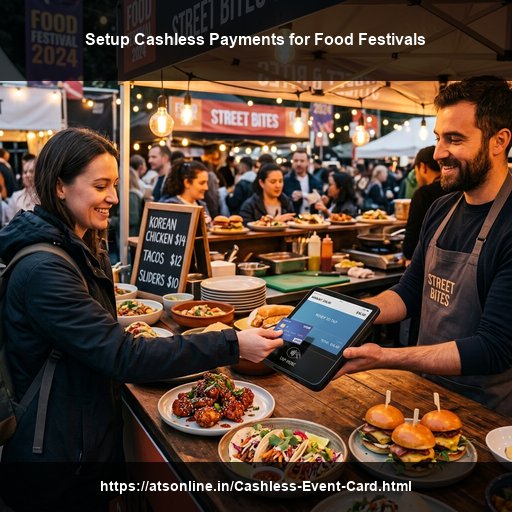
Indian food festivals like Zomaland, the Grub Fest, and local culinary carnivals have evolved into massive, high-revenue productions. With thousands of eager food lovers entering the gates, food and beverage stalls are hit with intense transaction volumes during peak dining hours. In this chaotic environment, transaction efficiency is everything. If payment processing is slow, lines back up, food gets cold, and attendees leave frustrated. This is why professional organizers are shifting away from cash and traditional UPI to implement a unified, closed-loop food festival payment system. Let’s dive into a complete guide on how to successfully set one up.
Why Food Festivals Require a Cashless System
Unlike regular retail spaces, food festivals operate under unique constraints. First, there is the issue of hygiene. Handling dirty paper money and metal coins while preparing and handing over plates of food is an active health hazard. Second, network congestion is guaranteed. When thousands of people crowd into a park or stadium, local 4G/5G towers choke, causing UPI scans and card reader requests to time out.
Finally, there is vendor fraud and reconciliation. Because food stalls are run by independent brands, organizers usually charge a percentage-based commission on their sales. Without a central payment system, tracking every single cash exchange or private UPI transaction is impossible. A closed-loop RFID cashless system solves all of these problems by shifting transactions entirely offline, digitally recording every sale, and speeding up queue times to under a second.
Step 1: Estimate Your Hardware and Card Requirements
Before the event starts, you must calculate your hardware requirements. Start by estimating your peak attendance. If you expect a daily throughput of 5,000 visitors, procure at least 6,000 RFID cards or wristbands to ensure a safety buffer.
Next, map out your vendors. Every food stall, beverage counter, and merchandise booth requires at least one dedicated, handheld POS terminal. Stalls with high transaction volume (like popular burger joints or beer bars) should have two terminals to divide ordering and payment lines. Always maintain a 10% inventory of spare POS terminals at your central command office to quickly replace any hardware that gets damaged or dropped in the kitchen.
Step 2: Establish the Top-Up and Activation Booths
The core of your cashless ecosystem is the activation and top-up network. Setup clearly marked, spacious recharge booths near the festival entrance gates, and a few secondary booths near the main seating areas. These booths are where attendees receive their cashless cards or wristbands and load them with funds.
Ensure these booths are equipped with reliable internet connections (wired broadband or dedicated hotspots) to handle external payment transactions. The operators must be able to accept cash, swipe credit/debit cards, and scan UPI QR codes to add balances to the guests' cards. To make the process even smoother, offer online pre-recharges. Attendees can load money onto their virtual card profile when purchasing tickets online, allowing them to instantly collect their pre-loaded physical card at the gate and skip the on-site recharge line entirely.
Step 3: Onboard and Train Food Vendors
Onboarding your vendors early is essential to a smooth event rollout. A few days before the festival, brief the vendors on how the system works. Explain that they are strictly forbidden from accepting direct cash or personal UPI payments, as the official POS terminal is the only way their sales will be recognized for payout.
Modern terminal interfaces, such as the ATS Food Festival Billing POS, are designed to be extremely intuitive. Spend 10 to 15 minutes with vendor staff, showing them how to select menu items, tap cards, and handle cancellations or refunds. Provide them with quick-reference instruction cards to keep at their counters.
Step 4: Managing the Live Event Operations
On the day of the event, position support staff throughout the food zone. Mobile technicians should carry backup POS terminals and be ready to resolve any operator issues.
Since the ATS cashless system operates offline, transactions at the stalls will continue seamlessly even if the venue's Wi-Fi drops. The terminals save transactions to their local encrypted memory. As technicians walk around, or when the connection is restored, the POS terminals sync their logs to the central database, giving you real-time visibility into the festival's overall sales, popular dishes, and peak transaction hours via your organizer dashboard.
Step 5: post-Event Reconciliation and Refunds
Reconciling a food festival used to take days of counting paper coupons, checking bank statements, and arguing over missing cash. With a cashless RFID system, reconciliation is completed within minutes.
Once the final stall closes, sync all POS terminals one last time. The system automatically compiles a master report showing the exact revenue generated by each vendor, calculates the organizer's commission splits, and outputs a clean PDF statement. This enables you to settle vendor payouts within 24 to 48 hours, building trust and ensuring the best food brands return for your next edition.
For guests, make the refund process simple and clear. Establish cash-out booths near the exit gates on the last night where they can return their cards and receive their remaining balance in cash. Alternatively, provide a secure website link where they can enter their RFID card number and UPI ID to receive a direct digital refund within 3 days.
Summary Checklist for Festival Organizers
- RFID Cards/Wristbands: Order peak attendance + 20% buffer.
- Recharge Booths: Set up 1 counter per 500 expected guests.
- Vendor Terminals: 1-2 handheld POS machines per food stall, plus 10% backup buffer.
- Staff Training: 15-minute operational walkthrough for all cashier staff.
- Refund Policy: Clear signs detailing on-site cash-out times or online refund links.
Conclusion: Elevate Your Food Fest with ATS
Running a successful food festival is a balancing act of logistics, crowd management, and financial control. By transitioning to a dedicated food festival payment system, you eliminate the delays of UPI dropouts, secure your revenue against leakage, and provide your guests with a fast, hygienic, and premium dining experience.
Ready to deploy a world-class cashless setup at your next food festival? Partner with Advance Technology Systems (ATS) for complete hardware, software, and on-site support.
You can reach us by phone at +91 9810078010 or by email at ats.fnb@gmail.com. Thank you for your interest in our services.
Upgrade your culinary event logistics today. Visit www.atsonline.in, call us at +91-9810078010, or email ats.fnb@gmail.com for food festival cashless solutions.