Virtual Restaurants: Unified Order Desks, Shared Kitchen Stocks & Brand Analytics
September 29, 2026 in Cloud Kitchen Management
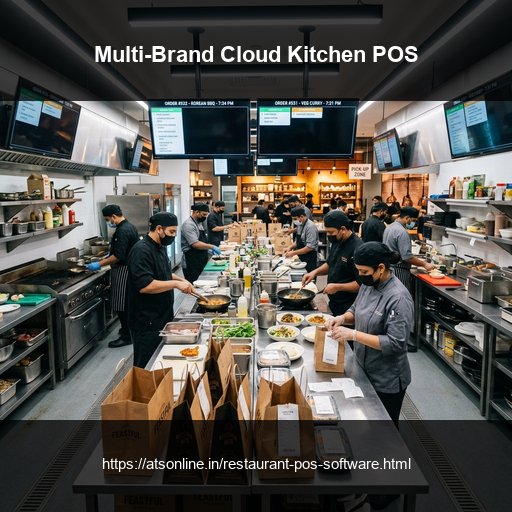
The Operational Complexity of Running Multi-Brand Virtual Kitchens
The cloud kitchen model allows culinary entrepreneurs to maximize real estate by operating four, six, or even ten distinct food brands from one shared commercial kitchen. For instance, a single facility might produce authentic biryani under Brand A, gourmet burgers under Brand B, healthy salads under Brand C, and artisan desserts under Brand D.
However, operating multiple virtual brands without unified point-of-sale software quickly leads to operational paralysis:
- Screen and Hardware Overload: Managing separate aggregator accounts for five brands can require up to 10 separate tablets lining the packaging counter.
- Shared Raw Material Discrepancies: Brands share common ingredients (such as onions, cooking oil, rice, and packaging tape), making it nearly impossible to calculate accurate individual brand profitability using disconnected billing apps.
- Packaging and Labeling Blunders: Line cooks accidentally pack Biryani Brand A inside Burger Brand B's branded takeaway bags, causing immediate customer brand confusion and bad reviews.
How ATS Unified Cloud Kitchen POS Simplifies Operations
ATS Cloud Kitchen POS consolidates the entire virtual brand ecosystem onto one powerful master terminal:
- Single Master Kitchen Screen: Incoming delivery orders across all virtual brands from Swiggy, Zomato, and direct web storefronts flow into one organized chronological order list.
- Brand-Specific KOT and Bag Label Printing: Every kitchen order ticket and customer bag sticker clearly prints the specific brand logo, packaging instructions, and delivery rider details, preventing cross-packaging mix-ups.
- Shared Inventory Pool with Brand Attribution: The central stock ledger manages shared raw ingredient stores. When Brand A sells a biryani and Brand C sells a rice bowl, rice stocks decrement accurately from the shared warehouse while attributing precise raw ingredient costs to the respective brand's balance sheet.
- Separate Financial Ledgers and Unified Dashboards: Inspect side-by-side performance: see which virtual brand generates the highest gross profit margin and which brand requires menu revision or marketing promotion.
Scaling Virtual Brands with Shared Culinary Labor
The primary financial advantage of a cloud kitchen is shared fixed overheads: one head chef, one utility sink, and one packaging station servicing multiple revenue streams.
With ATS Cloud Kitchen POS, line cooks do not need to know which brand an order belongs to; they simply follow the station KDS preparation queue. Dispatchers at the packing station scan printed barcodes to verify that every box, utensil packet, and drink corresponds precisely to the target brand's packaging guidelines before handing bags to delivery riders.
Comparison Matrix
| Cloud Kitchen Function | Multiple Disconnected Billing Terminals | ATS Single-Screen Cloud Kitchen POS |
|---|---|---|
| Order Intake Setup | 10+ Aggregator tablets lining packaging counter | Single consolidated touch terminal screen |
| KOT Dispatch Routing | Separate noisy printers for each tablet | Centralized smart routing by prep station and brand |
| Shared Ingredient Costing | Impossible to track; frequent food cost leakage | Unified inventory pool with exact brand-level cost attribution |
| Packaging Verification | High rate of wrong brand boxes and bags | Branded sticker and barcode dispatch validation |
| Brand Profitability Analysis | Days of manual multi-channel Excel work | Instant side-by-side brand P&L and item velocity reports |
Frequently Asked Questions
What is a multi-brand cloud kitchen POS system?
A multi-brand cloud kitchen POS system is an operational platform that unifies incoming orders, kitchen ticket routing, and inventory tracking for multiple virtual food brands operating out of a single physical commercial kitchen.
Can ATS POS handle separate brand menus and pricing?
Yes. Each virtual brand can maintain completely unique menus, combo offerings, pricing structures, and promotional discounts while running on the same POS terminal.
How does inventory work when multiple brands share the same raw ingredients?
ATS POS maintains a shared central inventory pool. When an order is placed for any brand, the corresponding raw ingredients are deducted from the central pool while allocating raw food costs specifically to that brand's ledger.
Does the system support brand-specific takeaway sticker printing?
Yes. The software supports high-speed thermal barcode and label printers that generate customized stickers with brand logos, customer dietary flags, and rider pickup tags.
Ready to Modernize Your Operations?
Transform your business with enterprise-grade restaurant POS solutions from ATS Online. Get real-time cloud control, rapid customer checkouts, automated recipe costing, and 100% operational uptime.
Or call our restaurant tech specialists directly at: +91-9810078010
Conclusion
Operating multiple virtual restaurant brands from a single kitchen footprint is the most capital-efficient business model in modern hospitality. By orchestrating orders, shared ingredient stocks, and separate brand identities through ATS Online's unified cloud kitchen POS, operators eliminate kitchen chaos and maximize return on commercial kitchen investments.
Upgrade to ATS hospitality POS and automation solutions today. Visit ATS Cloud Restaurant POS, call us at +91-9810078010, or email ats.fnb@gmail.com for live product demonstrations.
Related Reading
- How Cloud Restaurant POS Software Drives Speed, Higher Margins, and Multi-Outlet Scale
- How Direct Swiggy and Zomato POS Integration Eliminates Tablet Chaos and Order Errors
- Smart Inventory and Recipe Costing: How Restaurants Stop Food Waste and Protect Margins
- Kitchen Display Systems (KDS) vs. Paper KOTs: Accelerating Kitchen Turnaround Time