Franchise Operations: Centralized Production, Raw Material Dispatch & Traceability
September 29, 2026 in Central Kitchen Management
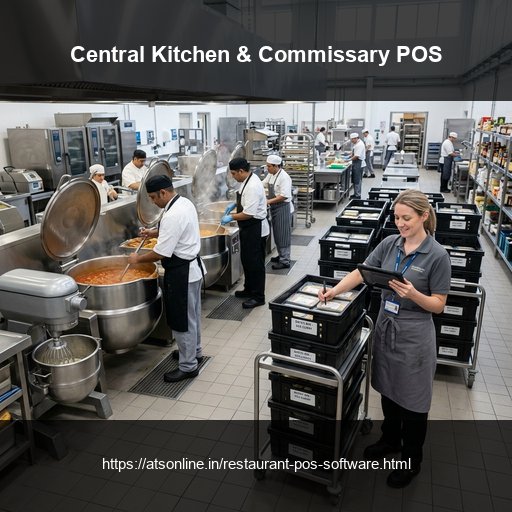
The Scaling Dilemma: Inconsistent Food Quality and Supply Chain Chaos
When a restaurant brand expands past three locations, decentralizing raw preparation across individual store kitchens becomes an operational nightmare. When each outlet prepares gravies, sauces, marinated meats, and bakery doughs on-site, taste profiles inevitably fluctuate depending on which line cook is working the shift. Furthermore, purchasing small ingredient quantities at individual stores destroys bulk volume purchasing power and leaves branches vulnerable to localized stockouts.
Without a digitized central commissary platform, restaurant operations suffer from predictable operational friction:
- Uncoordinated Branch Indents: Outlet chefs text or call commissary managers late at night with unstructured ingredient requests, leading to forgotten items and shipping mix-ups.
- Stock Discrepancies During Transit: Raw materials leave the central warehouse without digital goods dispatch notes (GDN), making it impossible to pin down whether missing items were lost in transit or miscounted at the outlet.
- Raw Material Spoilage & Over-Production: Central kitchens without live consumption visibility often cook excess perishable pre-mixes, leading to expensive dumpster wastage.
How Integrated Commissary POS Automates the Chain Supply Cycle
ATS Cloud Restaurant POS features an integrated Central Kitchen and Commissary Management engine that connects head-office production directly with outlet sales floors:
- Automated Digital Indenting: Outlet managers inspect current stock balances on their POS screen and submit digital indents with one tap. Indent cut-off times prevent last-minute dispatch chaos.
- Batch Yield & Production Planning: The commissary portal aggregates all outlet indents, compares them against bulk standard recipe formulations, and calculates the exact kilogram weights of raw vegetables, meats, and dairy required for morning production runs.
- Barcoded Dispatch and Goods Receipt Note (GRN): Dispatched food crates are assigned digitized transfer slips. When the delivery vehicle arrives at the retail outlet, store staff scan or verify items against the dispatch manifest, logging any shrinkage or transit damage instantly.
- Inter-Store Stock Rebalancing: If Branch A experiences unexpected surge demand while Branch B has surplus stock, the system coordinates compliant inter-store transfers with complete ledger audits.
Yield Standardization and Raw Material Traceability
Culinary standardization is what allows global QSR franchises to deliver the exact same culinary experience whether a customer orders in Mumbai, Delhi, or Bengaluru. Commissary management within ATS POS enforces strict yield tracking for cooked bulk batches.
If a 50kg batch of mother sauce requires 35kg of crushed tomatoes and 10kg of butter, the software tracks actual batch yield against theoretical yields. Any deviation exceeding 2% immediately alerts production supervisors to ingredient variance, moisture loss, or recipe tampering. Furthermore, lot-number and batch tracking ensure that if an ingredient supplier issues a recall, affected branches can be quarantined instantly before dishes reach customer tables.
Comparison Matrix
| Supply Chain Step | Manual Spreadsheet & Phone Calls | ATS Central Kitchen Commissary Module |
|---|---|---|
| Outlet Indent Submission | Unstructured phone calls, WhatsApp texts | Automated digital indent portal with cut-off rules |
| Bulk Production Scheduling | Manual guesswork on raw prep quantities | Dynamic BOM calculation based on aggregate indents |
| Transit Loss Tracking | No transit verification; blame game between units | Digitized GDN and GRN check with instant variance alerts |
| Recipe Yield Monitoring | Unknown kitchen loss during cooking | Theoretical vs. actual yield analytics per batch |
| Franchise Billing & Costing | Complex end-of-month manual reconciliation | Automated internal transfer pricing and branch P&L |
Frequently Asked Questions
What is a central kitchen commissary management system?
A central kitchen commissary management system is an enterprise software platform that handles bulk ingredient procurement, large-scale standardized recipe prep, digital store indent approvals, and delivery logistics to satellite restaurant branches.
Can individual restaurant branches submit indents directly through their POS terminal?
Yes. With ATS POS, outlet managers submit daily or weekly indent requisitions straight from their counter terminal, which instantly registers on the central commissary's production board.
Does the commissary module handle raw material price fluctuations?
Yes. The system utilizes weighted average costing (AVCO) or First-In-First-Out (FIFO) valuation to maintain accurate internal transfer prices and branch food cost accounting.
How does the system ensure food safety and batch traceability?
Every production batch generated in the central kitchen is assigned a unique batch ID and timestamp, linking dispatched containers to specific raw vendor shipments and destination restaurant outlets.
Ready to Modernize Your Operations?
Transform your business with enterprise-grade restaurant POS solutions from ATS Online. Get real-time cloud control, rapid customer checkouts, automated recipe costing, and 100% operational uptime.
Or call our restaurant tech specialists directly at: +91-9810078010
Conclusion
For scaling restaurant chains, a unified central kitchen and commissary management module is the bedrock of sustained profitability. By standardizing prep batch yields, automating branch indent logistics, and eliminating manual bookkeeping errors, ATS Online empowers multi-store restaurant enterprises to scale rapidly while guaranteeing identical culinary quality across every outlet.
Upgrade to ATS hospitality POS and automation solutions today. Visit ATS Cloud Restaurant POS, call us at +91-9810078010, or email ats.fnb@gmail.com for live product demonstrations.
Related Reading
- How Cloud Restaurant POS Software Drives Speed, Higher Margins, and Multi-Outlet Scale
- How Direct Swiggy and Zomato POS Integration Eliminates Tablet Chaos and Order Errors
- Smart Inventory and Recipe Costing: How Restaurants Stop Food Waste and Protect Margins
- Kitchen Display Systems (KDS) vs. Paper KOTs: Accelerating Kitchen Turnaround Time